
How to Counsel a Patient Considering a Joint Injection
By the time a patient raises an injection, they have usually decided they want one. The useful conversation is not whether to inject but what they are choosing between, and what each option can honestly be expected to do.

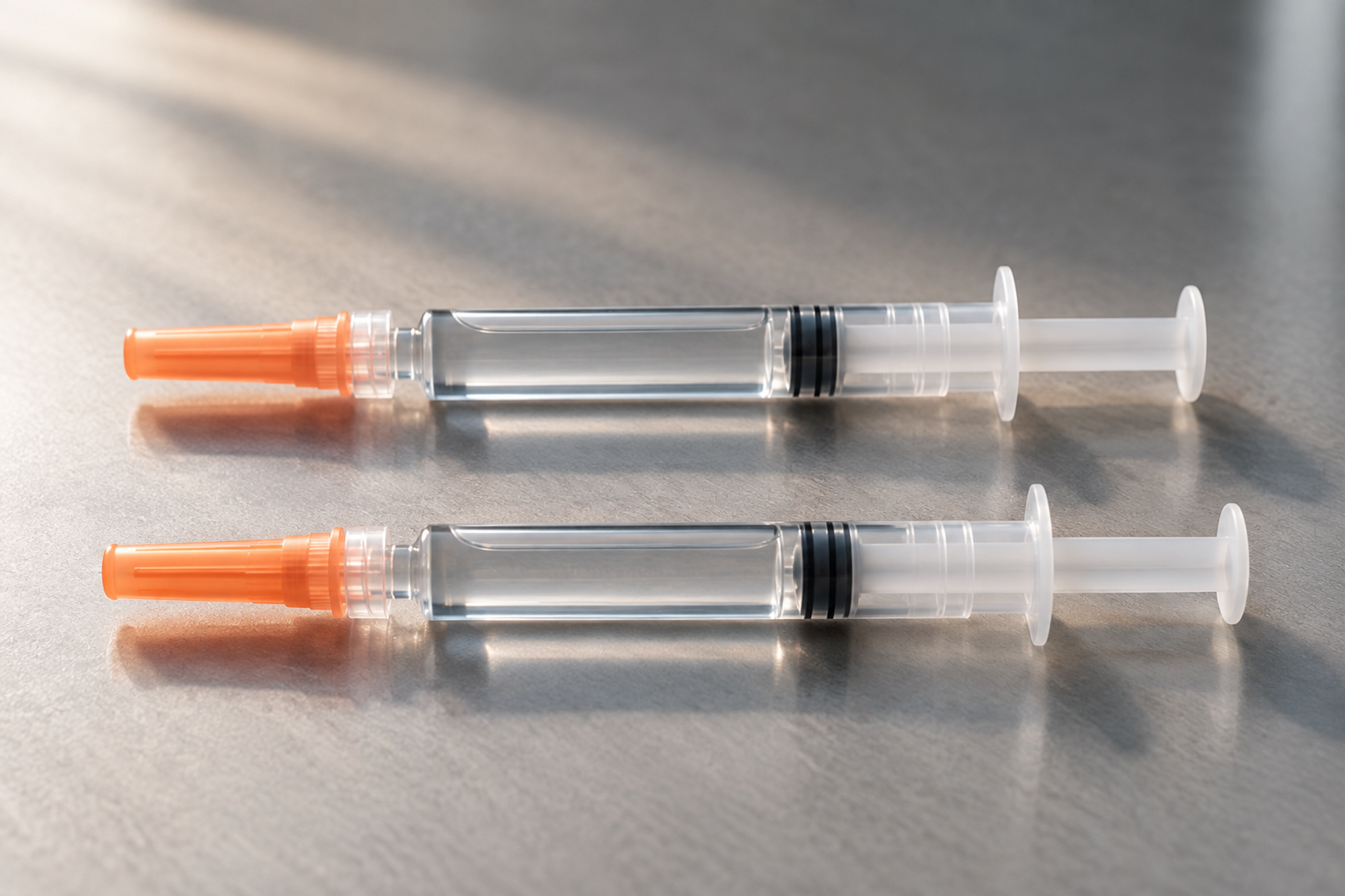
Joint injections occupy an awkward space. They are among the most commonly performed procedures in musculoskeletal practice, and the major guidelines are more negative about most of them than everyday practice suggests. A clinician who simply recites the guideline position will lose the patient, and one who simply injects has skipped the part that matters.
What follows is a way through that, built around what the trials actually found.
Start by finding out what they are asking for
“I want an injection” can mean several different things, and they need separating before any discussion of evidence.
Some patients want pain relief to get through a defined event — a holiday, a daughter’s wedding, the weeks before a planned operation. Some want to avoid or delay surgery. Some have read that a particular product regenerates cartilage. And some have already been told by somebody else that they are a candidate and are seeking confirmation.
These lead to different conversations. A short-term corticosteroid for a patient with a specific event in eight weeks is a reasonable and well-supported plan. The same injection offered as a disease-modifying strategy is not.
It is also worth asking what they have already read and, specifically, where. Patients arriving with a clinic’s marketing material have usually encountered claims about cartilage regeneration that the evidence does not support, and it is easier to address that directly than to work around it.
What the evidence supports
Corticosteroid. It works, briefly. The ACR conditionally recommends it for short-term symptom relief, and that is a fair summary of the data: meaningful improvement over a few weeks, diminishing thereafter.
The trial worth knowing in detail is McAlindon’s. [1] 140 patients with symptomatic knee osteoarthritis received intra-articular triamcinolone or saline every twelve weeks for two years. At the end, there was no significant difference in pain between the groups — and the steroid group had lost roughly twice as much cartilage, with mean cartilage thickness change of −0.21 mm versus −0.10 mm.
That result does not mean a single injection for a flare is wrong. It means a programme of repeated injections, which is what many patients drift into, has been tested and did not deliver.
Hyaluronic acid. Here the guidance is genuinely contested, and presenting it as settled misrepresents the field.
The ACR’s 2019 guideline moved from no recommendation to a conditional recommendation against hyaluronic acid, mirroring the AAOS position retained in its 2021 update. [2] But a review of 22 international organisations found 19 were neutral or favourable toward it. [3] The disagreement turns on how much weight to give trials with high risk of bias and on what counts as a clinically meaningful threshold.
The honest version for a patient: the two most influential American bodies advise against it, much of the rest of the world does not, and the effect — if real — is modest and slow in onset.
Platelet-rich plasma. The RESTORE trial is the one to know. [4] 288 participants received three weekly injections of PRP or saline. At twelve months, pain had improved by 2.1 points with PRP and 1.8 with saline, a difference of 0.4 points that was not statistically significant. Medial tibial cartilage volume fell 1.4% with PRP and 1.2% with saline, also not significant.
The ACR conditionally recommends against PRP, citing heterogeneity in study quality and the absence of standardised preparation protocols. [5] That second point deserves emphasis in any consultation: PRP is not one product. Platelet concentration, leucocyte content, activation method and injection volume vary substantially between systems, so a patient quoting a positive study may be describing something quite different from what your clinic prepares.
The placebo finding, and why it matters most
This is the part clinicians most often skip, and it explains nearly everything puzzling about this area.
Look again at the saline arms. In RESTORE, placebo produced a 1.8-point pain improvement over twelve months. In the McAlindon trial, saline performed as well as steroid on pain across two years. These are not trivial responses. Intra-articular injection of an inert fluid reliably produces substantial, durable symptomatic improvement.
So when a colleague says their PRP patients do well, they are almost certainly right. The patients do well. The trials do not dispute that; they establish that the patients would have done similarly well with saline, at a fraction of the cost.
This reframing is useful in the consultation because it is not dismissive. It takes the patient’s anticipated improvement seriously while being honest about what is producing it, and it moves the question from “will this work” to “is this worth what it costs relative to the alternatives.”
What changes the recommendation regardless of efficacy
Several considerations sit outside the efficacy discussion and can override it.
Planned arthroplasty. Intra-articular steroid injection within three months of total knee arthroplasty is associated with increased periprosthetic joint infection risk. [6] If surgery is on the horizon, the timing conversation needs to happen with the operating surgeon before the injection, not after.
Diabetes. Intra-articular corticosteroid raises blood glucose, often for several days. Patients on insulin or sulfonylureas should know to monitor more closely, and poorly controlled diabetes is a reason to reconsider.
Infection risk. Septic arthritis after injection is rare but serious. Overlying skin infection is an absolute contraindication, and any patient receiving an injection should be told what increasing pain, swelling, heat and fever mean and when to seek care urgently.
Anticoagulation and bleeding risk. Usually manageable but worth establishing before the needle.
Repeated steroid. Accumulating exposure is the scenario the McAlindon data speaks to most directly. A patient on their fourth or fifth injection of the year is in a different situation from one considering their first.
A sequence for the consultation
- Establish the goal. Short-term relief for a defined purpose, or a hope of structural change? The second needs correcting before anything else.
- Name what is being offered, precisely. Which agent, which preparation, how many injections, at what interval and at what total cost.
- State the evidence in one sentence per option. Short-term benefit for steroid; contested for hyaluronic acid; not better than saline in the largest trial for PRP.
- Explain the placebo finding. This is what makes the rest credible rather than discouraging.
- Cover the non-efficacy considerations. Surgical timing, diabetes, infection, cumulative exposure.
- Say what else is on the table. Structured exercise and weight management remain the best-supported interventions in knee osteoarthritis and are frequently skipped on the way to a needle.
- Document the discussion, including that unapproved or investigational use was identified as such.
When they want it anyway
Many will, and that is not automatically unreasonable. A patient who understands the evidence, can afford the cost without hardship, and wants to try something before considering surgery is making a defensible choice.
What makes it defensible is that it was informed. The failure mode is not performing the injection; it is performing it after a conversation that implied more than the data supports, or that never mentioned the saline comparison at all.
Two practical safeguards. Agree in advance what success looks like and over what period, so there is a defined point at which to stop rather than drifting into an indefinite series. And if the clinic performing the injection also profits from it, say so plainly — patients are rarely surprised by this, and they notice when it is not mentioned.
For how to appraise a study a patient brings in, see How to read a longevity study. For the broader problem of marker-based reasoning, see Your biomarkers improved — did your healthspan?.
- [1]McAlindon TE, LaValley MP, Harvey WF, et al. Effect of intra-articular triamcinolone vs saline on knee cartilage volume and pain in patients with knee osteoarthritis: a randomized clinical trial. JAMA. 2017;317(19):1967–1975.Verify full author list and page range.
- [2]Kolasinski SL, Neogi T, Hochberg MC, et al. 2019 American College of Rheumatology/Arthritis Foundation guideline for the management of osteoarthritis of the hand, hip, and knee. Arthritis & Rheumatology. 2020;72(2):220–233.Confirm current edition; see also AAOS 2021 management of osteoarthritis of the knee, third edition.
- [3]Commentary reporting that 19 of 22 international organisations reviewed were neutral or favourable toward intra-articular hyaluronic acid. Journal of Rheumatology. 2022;49(8):958.Authored by critics of the ACR position; verify full citation and read alongside the guideline itself.
- [4]Bennell KL, Paterson KL, Metcalf BR, et al. Effect of intra-articular platelet-rich plasma vs placebo injection on pain and medial tibial cartilage volume in patients with knee osteoarthritis: the RESTORE randomized clinical trial. JAMA. 2021;326(20):2021–2030.Verify full author list and page range.
- [5]Review of current perspectives on platelet-rich plasma for knee osteoarthritis, summarising guideline positions and preparation heterogeneity. Open Access Journal of Sports Medicine.Verify full citation before publishing.
- [6]Preoperative intra-articular steroid injections within 3 months increase the risk of periprosthetic joint infection in total knee arthroplasty: a systematic review and meta-analysis. Journal of Orthopaedic Surgery and Research. 2023.Verify full author list and effect estimates.
The content on this site is provided for general information and education. It is not medical advice, and it is not a substitute for consultation with a qualified healthcare professional who knows your individual circumstances.
Many of the interventions discussed here are investigational. Some are available only within clinical trials; others are marketed directly to consumers without having been shown to be safe or effective for the purposes claimed. Nothing on this site should be read as a recommendation to start, stop or alter any treatment.
If you are considering a therapy you have read about here, discuss it with your own physician first.