Supporting Endogenous Cellular Repair: A Regenerative Medicine Framework
The capacity of cells to maintain, repair and renew themselves depends on several interconnected systems. No single intervention activates all of them, which is why sequence matters more than the number of therapies applied.

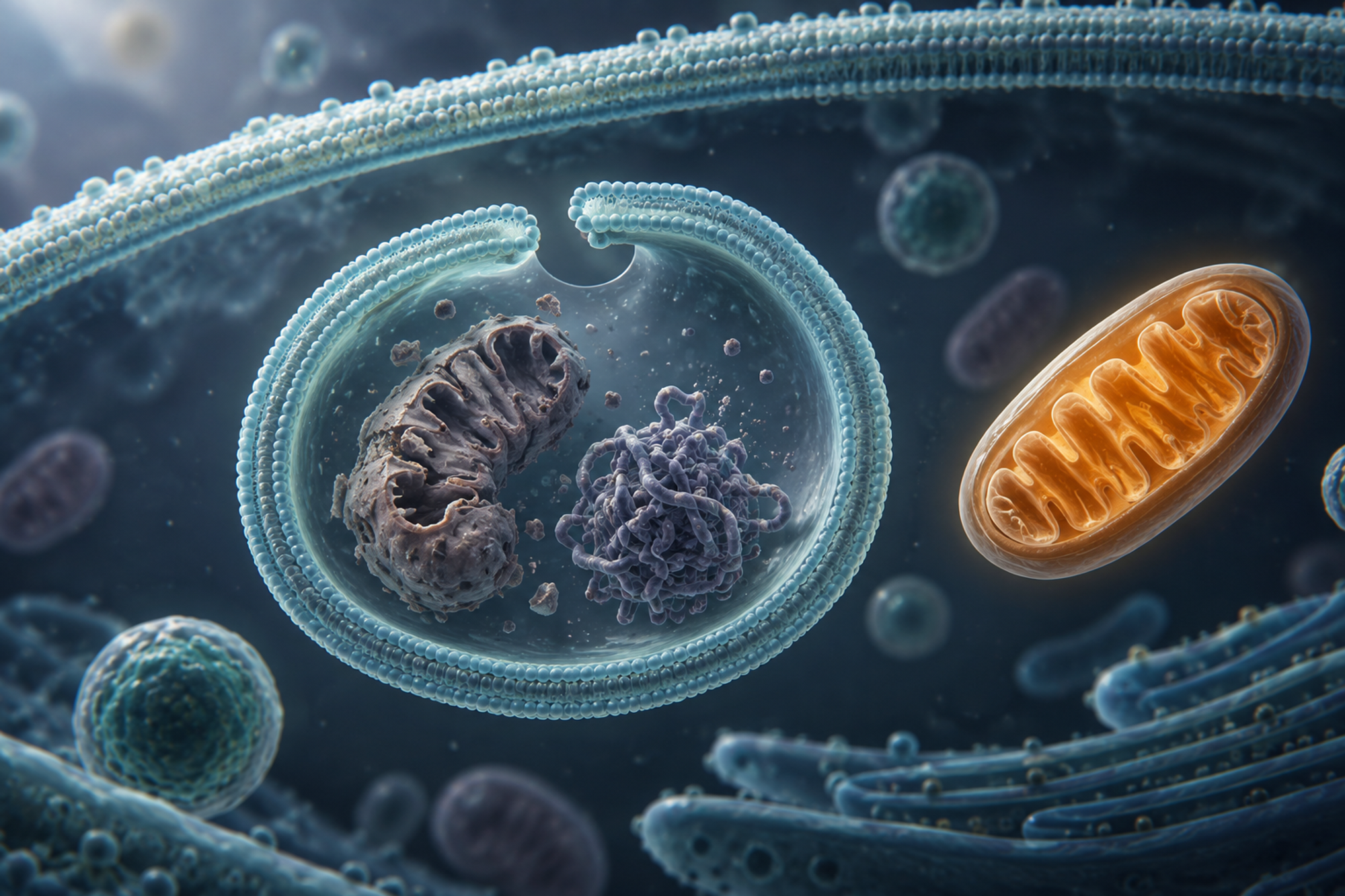
Cellular repair is best approached as a coordinated biological programme rather than as a single treatment. DNA repair, autophagy, mitochondrial quality control, antioxidant defence, protein turnover, immune regulation and progenitor-cell signalling all contribute, and each depends on the others functioning adequately.
A practical regenerative strategy therefore begins by removing the metabolic and toxic stressors that block repair, then restores the nutritional, metabolic and physical conditions that repair requires. Supplements, photobiomodulation, oxygen-based interventions and investigational regenerative therapies are layered onto that foundation when clinically appropriate — not before it.
Repair as a coordinated process
The phrase cellular self-repair covers several distinct systems working in parallel.
DNA-repair enzymes identify and correct genomic damage. Autophagy and lysosomal pathways remove defective proteins and organelles. Mitophagy eliminates damaged mitochondria, while mitochondrial biogenesis restores energy-producing capacity. Antioxidant systems limit secondary injury. Stem and progenitor cells participate in tissue remodelling.
The effectiveness of any regenerative intervention depends on whether these systems have adequate energy, oxygen, substrates and signalling support. An intervention applied to a cell that lacks those conditions is unlikely to produce the intended result, however well designed it is.
A hierarchy of interventions
1. Remove factors that block repair
Repair cannot proceed efficiently while cells remain exposed to continuous metabolic, inflammatory or toxic stress. The first step is to reduce the burden that created or perpetuates the injury.
- Eliminate alcohol during an active liver-recovery programme.
- Remove sugar-sweetened beverages and sharply restrict added sugar and refined carbohydrates.
- Reduce excessive caloric intake and visceral adiposity without creating malnutrition or rapid catabolism.
- Review medications, supplements and environmental exposures that may add hepatic or oxidative stress.
- Correct inadequate sleep, untreated sleep apnoea, dehydration and persistent circadian disruption.
2. Activate autophagy and metabolic renewal
Autophagy recycles damaged cellular components and helps preserve metabolic flexibility. Meal timing, energy balance and exercise all influence this pathway.
The response is tissue-specific, and the fasting duration required to produce clinically meaningful autophagy in humans has not been established. A conservative programme may begin with a 12- to 14-hour overnight fasting interval where glucose control, medication use and nutritional status permit. Longer fasting requires direct clinical supervision.
- Progress toward 150 to 300 minutes of moderate aerobic exercise each week.
- Perform resistance training two or three times weekly.
- Use short periods of movement after meals to improve glucose handling.
- Avoid prolonged fasting in frailty, undernutrition, pregnancy, hepatic decompensation or unstable diabetes.
3. Supply the substrates repair requires
Cellular repair requires amino acids, essential fatty acids, minerals and vitamin cofactors. Supplementation should follow laboratory assessment, dietary review and medication reconciliation rather than the indiscriminate use of large stacks.
- Adequate protein and essential amino acids.
- N-acetylcysteine or glycine as glutathione precursors where appropriate.
- Omega-3 EPA and DHA, coenzyme Q10 and magnesium.
- Zinc, selenium, vitamin D, vitamin B12, folate, vitamin C or vitamin E where deficiency or a defined indication exists.
- Polyphenols such as curcumin or quercetin, introduced sequentially.
- Prebiotic fibre, selected probiotics and appropriate hydration to support the gut-liver axis.
4. Support mitochondrial quality control
Mitochondria determine cellular energy availability and participate in redox signalling, apoptosis and inflammatory regulation. Exercise, sleep regularity, metabolic control and correction of nutrient deficiencies form the foundation of mitochondrial support.
Red and near-infrared photobiomodulation can alter cytochrome-c oxidase activity and tissue oxygenation, although parameters must be matched to the tissue and the device. [2]
- Aerobic and resistance exercise.
- Consistent sleep and circadian timing.
- Coenzyme Q10, magnesium and glutathione-supportive substrates where clinically appropriate.
- Red or near-infrared photobiomodulation using documented wavelength, irradiance, dose and treatment area.
5. Improve perfusion, oxygenation and lymphatic flow
Repairing tissue requires adequate perfusion, oxygen delivery and removal of metabolic by-products. Walking, muscle contraction and hydration provide the simplest support.
Photobiomodulation, pulsed electromagnetic field therapy, sauna, manual lymphatic techniques and oxygen-based therapies may be added after screening for relevant contraindications. Hyperbaric oxygen has been associated with mobilisation of circulating progenitor cells, but the clinical meaning is condition-specific. [3]
- Regular walking and movement throughout the day.
- Hydration and correction of clinically relevant fluid or electrolyte imbalance.
- Manual lymphatic drainage or gentle mobility where indicated.
- Photobiomodulation or PEMF using condition-specific parameters.
- Hyperbaric oxygen therapy only after pulmonary, otologic, neurologic and glucose-risk assessment.
6. Consider regenerative interventions
Advanced interventions may supply cells, platelets, signalling molecules or extracellular vesicles intended to modify the local repair environment. Their use should be diagnosis-specific and accompanied by product characterisation, sterility controls, informed consent and longitudinal monitoring. Systemic mesenchymal stromal cells and exosome products for liver disease remain investigational.
- Mesenchymal stromal-cell preparations.
- Autologous regenerative-cell preparations.
- Platelet-rich plasma for selected localised musculoskeletal conditions.
- Exosome or extracellular-vesicle products.
- Peptide or secretome-based strategies with defined composition and monitoring.
7. Address senescent and dysfunctional cells
Senescent cells may impair repair through inflammatory signalling, but cellular senescence also contributes to wound healing and tumour suppression. That dual role argues for caution rather than enthusiasm.
Exercise, glucose control and weight optimisation offer a lower-risk starting point. Fisetin, quercetin combinations, rapamycin and other senolytic or mTOR-modulating strategies require careful selection, because excessive pathway suppression may impair immunity, healing or glucose regulation.
Application to metabolic dysfunction and steatotic liver disease
In metabolic dysfunction-associated steatotic liver disease, the highest-priority strategy is to remove hepatic stress and restore metabolic signalling. Alcohol avoidance, elimination of sugar-sweetened beverages, gradual reduction of visceral adiposity, exercise, sleep optimisation and treatment of insulin resistance should all precede advanced regenerative interventions.
Nutraceuticals should be introduced individually, so that intolerance or deterioration in liver tests can be attributed accurately.
- Remove injury. Alcohol, added sugar, excess calories and potentially hepatotoxic exposures.
- Restore foundations. Nutrition, sleep, exercise, hydration and correction of deficiencies.
- Add targeted support. One mitochondrial, antioxidant, gut-liver or lymphatic module at a time.
- Reassess. Liver enzymes, metabolic markers, symptoms, weight, waist circumference and fibrosis risk.
- Escalate selectively. Consider device-based or regenerative interventions only after staging and response review.
Clinical safeguards
A regenerative framework should not be converted into a fixed prescription without reviewing diagnosis, liver and kidney function, medication interactions, nutritional status, pregnancy status, bleeding risk, glucose control and frailty.
Products should be introduced sequentially. Treatment should be stopped or reassessed if jaundice, dark urine, ascites, confusion, bleeding, severe gastrointestinal symptoms, allergic reactions, acute kidney injury or materially worsening liver tests occur.
Conclusion
Endogenous cellular repair is most effectively supported through a sequence: reduce injury, restore metabolic and nutritional foundations, stimulate physiological renewal, add targeted mitochondrial and perfusion support, monitor response, and reserve advanced regenerative interventions for carefully selected situations.
The objective is not simply to add more therapies. It is to create the biological conditions in which repair pathways can function coherently.
- [1]Martinez-Lopez N, Tarabra E, Toledo M, et al. System-wide benefits of intermeal fasting by autophagy. Cell Metabolism. 2017;26(6):856–871.e5.doi.org/10.1016/j.cmet.2017.09.020
- [2]Saucedo CL, Courtois EC, Wade ZS, et al. Transcranial laser stimulation: mitochondrial and cerebrovascular effects in younger and older healthy adults. Brain Stimulation. 2021;14(2):440–449.doi.org/10.1016/j.brs.2021.02.011
- [3]Efrati S, Fishlev G, Bechor Y, et al. Hyperbaric oxygen induces late neuroplasticity in post-stroke patients: a randomised, prospective trial. PLoS ONE. 2013;8(1):e53716.doi.org/10.1371/journal.pone.0053716
- [4]Lim L, Hosseinkhah N, Van Buskirk M, et al. Photobiomodulation for cognitive dysfunction in post-COVID-19 condition: a randomised double-blind sham-controlled pilot trial. eClinicalMedicine. 2026;92:103730.Pilot trial; primary endpoint not met.doi.org/10.1016/j.eclinm.2025.103730
The content on this site is provided for general information and education. It is not medical advice, and it is not a substitute for consultation with a qualified healthcare professional who knows your individual circumstances.
Many of the interventions discussed here are investigational. Some are available only within clinical trials; others are marketed directly to consumers without having been shown to be safe or effective for the purposes claimed. Nothing on this site should be read as a recommendation to start, stop or alter any treatment.
If you are considering a therapy you have read about here, discuss it with your own physician first.