The 12 Hallmarks of Aging: A Cellular Map of Biological Ageing and the Path Toward Healthier Longevity
Ageing is not one process. It is a network of cellular changes that gradually reduces resilience, repair and function, and the hallmarks framework exists to make that network legible.
The hallmarks provide a practical structure for understanding why biological systems lose stability and regenerative capacity over time. The expanded 2023 model identifies twelve interconnected processes, and their clinical value lies in helping organise complex biology into measurable domains.
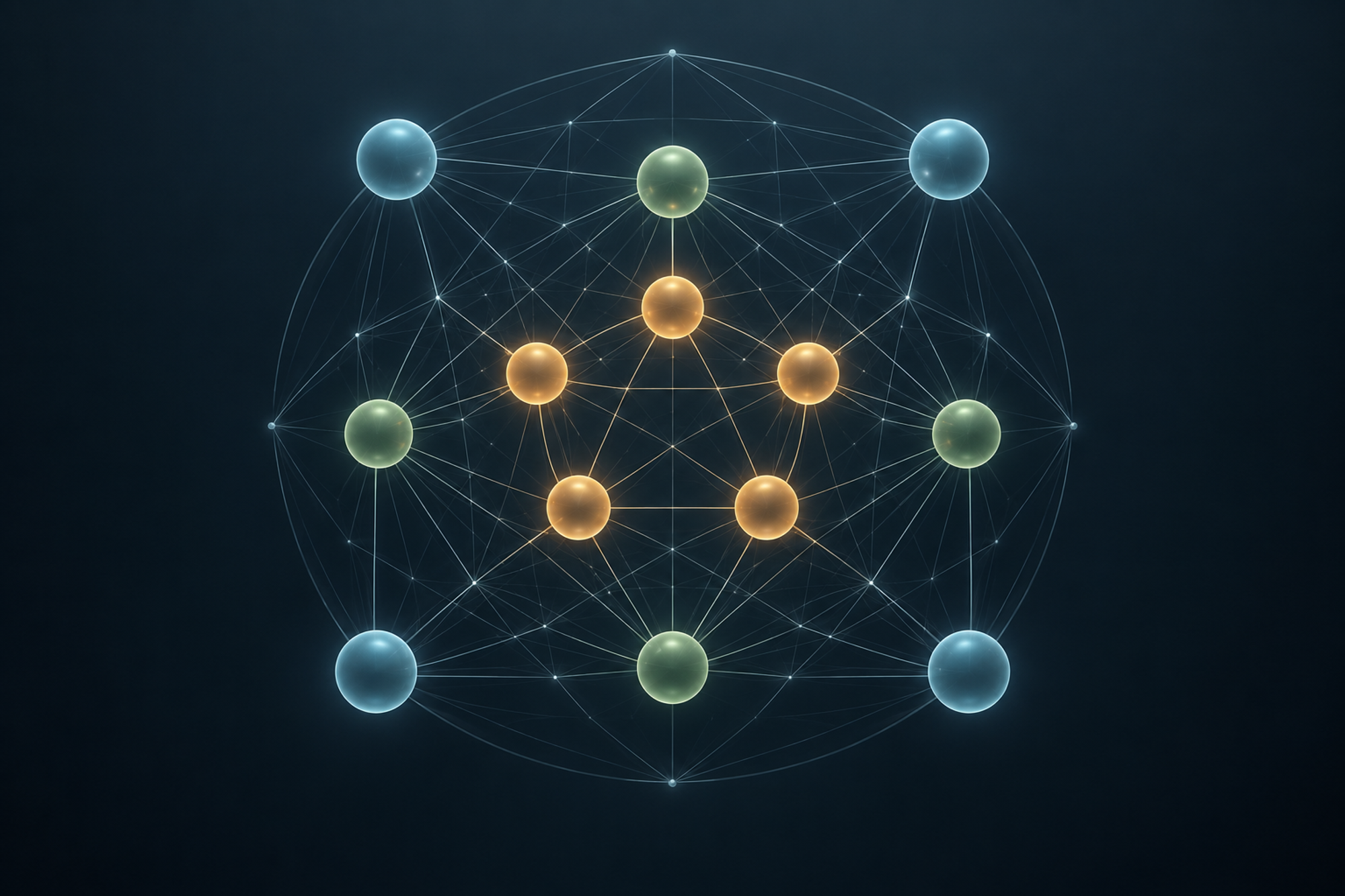
They are not twelve isolated diseases. They form a dynamic network in which damage, compensatory responses and systemic decline reinforce one another.
From nine hallmarks to twelve
In 2013, López-Otín and colleagues proposed nine hallmarks that became a widely used map of ageing biology. [2]
A decade of research indicated that three further domains deserved distinct recognition: disabled macroautophagy, chronic inflammation and dysbiosis. The 2023 update expanded the framework accordingly and placed greater emphasis on the extent to which the hallmarks interact. [1]
A process qualifies as a hallmark when three conditions hold: it is associated with normal ageing, experimentally worsening it accelerates ageing, and therapeutic modulation improves aspects of health or lifespan in experimental models.
Three layers of the ageing process
Primary hallmarks represent damage and maintenance failure: genomic instability, telomere attrition, epigenetic alterations, loss of proteostasis and disabled macroautophagy.
Antagonistic hallmarks are compensatory responses that can become harmful: deregulated nutrient sensing, mitochondrial dysfunction and cellular senescence.
Integrative hallmarks represent loss of tissue and whole-body function: stem cell exhaustion, altered intercellular communication, chronic inflammation and dysbiosis.
This hierarchy is not a rigid sequence. A primary form of damage can provoke an adaptive response that later contributes to tissue dysfunction. Inflammation can impair stem cells. Mitochondrial stress can alter epigenetic regulation. Dysbiosis can reshape immune signalling. The framework is best understood as a network rather than a checklist.
The primary hallmarks
1. Genomic instability. DNA damage, mutations, chromosome errors and imperfect repair accumulate, challenging cellular identity and survival.
2. Telomere attrition. Protective chromosome ends shorten or become dysfunctional, limiting renewal and activating damage responses.
3. Epigenetic alterations. Changes in DNA methylation, histones and chromatin organisation distort patterns of gene regulation.
4. Loss of proteostasis. Protein production, folding, trafficking and disposal become less reliable, allowing damaged proteins to accumulate.
5. Disabled macroautophagy. Cells become less efficient at recycling damaged structures and macromolecules through lysosomal degradation.
The antagonistic hallmarks
These begin as responses to stress. At moderate levels they may preserve survival; when persistent or excessive, they can accelerate dysfunction. That dual nature is the reason biological context, dose and timing matter so much in longevity interventions — and the reason that suppressing one of these pathways is not straightforwardly beneficial.
6. Deregulated nutrient sensing. Insulin and IGF-1, mTOR, AMPK and sirtuin pathways lose coordination, altering growth, repair and metabolic adaptation.
7. Mitochondrial dysfunction. Energy production, redox balance, mitochondrial quality control and stress signalling become impaired.
8. Cellular senescence. Damaged or stressed cells enter a durable growth arrest and may release inflammatory and tissue-remodelling signals.
The integrative hallmarks
9. Stem cell exhaustion. Tissue-specific stem and progenitor cells lose regenerative capacity, reducing repair after injury or stress.
10. Altered intercellular communication. Hormonal, neuronal, immune and extracellular signals become less coordinated across cells and organs.
11. Chronic inflammation. Persistent low-grade inflammatory activity can damage tissue, disrupt metabolism and impair regenerative responses.
12. Dysbiosis. Age-associated changes in microbial ecosystems and barrier function can alter metabolism, immunity and systemic signalling.
Why the hallmarks matter clinically
The framework changes the question from "which single molecule causes ageing?" to "which connected systems are losing resilience in this person?"
Ageing is expressed differently across individuals and tissues. One patient may show declining muscle reserve and metabolic inflexibility; another may show immune dysregulation, cognitive change or impaired recovery. The hallmarks help organise these patterns without implying that any single test can diagnose biological ageing.
A clinical assessment can connect the framework to functional measures, body composition, metabolic and vascular markers, inflammatory trends, sleep, cognition, microbiome-related symptoms and recovery capacity. Epigenetic clocks, telomere tests and other biological-age tools may contribute information, but each captures only part of the system and should be interpreted alongside clinical function rather than in place of it.
A multimodal strategy
Because the hallmarks interact, healthspan programmes should not be built around one product or pathway.
The strongest foundation remains preservation of muscle and aerobic capacity, metabolic control, adequate nutrition, restorative sleep, avoidance of damaging exposures, psychological resilience and meaningful social connection. These inputs influence several hallmarks simultaneously and provide the physiological reserve needed for recovery.
- Assess. Define functional goals, medical context, dominant risks and baseline measures.
- Prioritise. Identify the few biological and functional domains most likely to limit healthspan.
- Sequence. Build foundational capacity before adding targeted or regenerative interventions.
- Measure. Track function, symptoms, safety markers and durability rather than relying on one surrogate.
- Adapt. Continue, modify or stop interventions according to the patient's response and risk profile.
The regenerative medicine perspective
Regenerative medicine is particularly relevant to stem cell exhaustion, altered intercellular communication, chronic inflammation and loss of tissue integrity. But no regenerative product operates in isolation from the other hallmarks.
A cellular therapy placed into a metabolically unhealthy, inflamed or poorly vascularised environment may encounter precisely the conditions that impaired endogenous repair in the first place. The biological terrain matters as much as the intervention.
Emerging approaches include senescence modulation, autophagy and nutrient-sensing strategies, mitochondrial quality control, immune modulation, microbiome-directed interventions, gene and epigenetic technologies, extracellular vesicles, biomaterials and cellular therapies. Many remain investigational for ageing itself. Responsible innovation requires a defined target, a characterised product, appropriate consent, safety surveillance, and outcomes that reflect function and healthspan rather than a surrogate marker.
The future of ageing medicine
The next generation of ageing medicine will likely combine longitudinal biomarkers with functional testing, imaging and continuous physiological data. Rather than assigning a single biological age, clinicians may build multidimensional profiles showing which systems are stable, which are accelerated and which are responsive to intervention. Artificial intelligence may help identify patterns across these layers, but interpretation will still require clinical judgement and an understanding of the patient's priorities.
The hallmarks are a map, not the destination. The goal is not to normalise every molecular signal. It is to preserve the capacity to move, think, recover, connect and remain independent for as much of life as possible.
Conclusion
The twelve hallmarks describe a connected biological network linking cellular damage, stress responses and declining tissue function. They offer a common language for research, prevention, longevity medicine and regenerative care.
Their greatest practical value is to encourage multidimensional assessment and carefully sequenced interventions directed toward resilience and healthspan, while recognising the limits of current biomarkers and the investigational status of many emerging therapies.
- [1]López-Otín C, Blasco MA, Partridge L, Serrano M, Kroemer G. Hallmarks of aging: an expanding universe. Cell. 2023;186(2):243–278.doi.org/10.1016/j.cell.2022.11.001
- [2]López-Otín C, Blasco MA, Partridge L, Serrano M, Kroemer G. The hallmarks of aging. Cell. 2013;153(6):1194–1217.doi.org/10.1016/j.cell.2013.05.039
- [3]Kennedy BK, Berger SL, Brunet A, et al. Geroscience: linking aging to chronic disease. Cell. 2014;159(4):709–713.doi.org/10.1016/j.cell.2014.10.039
- [4]López-Otín C, Kroemer G. Hallmarks of health. Cell. 2021;184(1):33–63.doi.org/10.1016/j.cell.2020.11.034
- [5]Partridge L, Deelen J, Slagboom PE. Facing up to the global challenges of ageing. Nature. 2018;561:45–56.doi.org/10.1038/s41586-018-0457-8
The content on this site is provided for general information and education. It is not medical advice, and it is not a substitute for consultation with a qualified healthcare professional who knows your individual circumstances.
Many of the interventions discussed here are investigational. Some are available only within clinical trials; others are marketed directly to consumers without having been shown to be safe or effective for the purposes claimed. Nothing on this site should be read as a recommendation to start, stop or alter any treatment.
If you are considering a therapy you have read about here, discuss it with your own physician first.