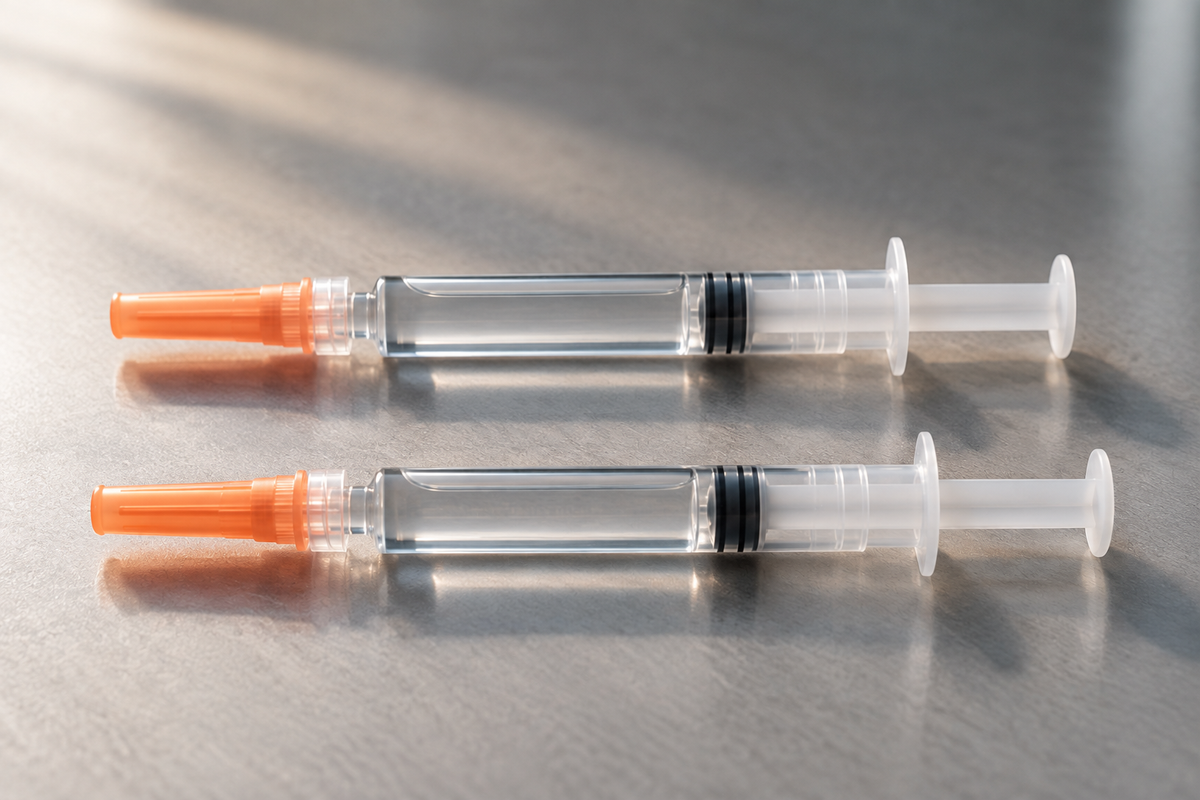
5 Questions Patients Ask About Peptide Safety (And How to Answer Them)
Patients rarely ask how a peptide works. They ask whether it is safe. The honest answer is usually "it depends which one," and that answer only sounds evasive if you cannot explain why.

Safety questions arrive in a small number of recurring forms. They are reasonable questions, and most contain an assumption worth gently correcting: that "peptide" is a category with a safety profile, that natural means harmless, or that no reported harm means no harm.
What follows are the five that come up most often, what the evidence supports in each case, and a plain-language answer a clinician can give without either overstating the risk or dismissing it. Each suggested answer is a starting point, not a script.
1. "Are peptides safe?"
This is the most common question, and it contains a category error. "Peptide" describes a molecule's size. It says nothing about safety, in the same way that "small molecule" says nothing about whether a given tablet is aspirin or strychnine.
The spread of evidence within the category is enormous. Semaglutide has been studied in large outcome trials — the SELECT cardiovascular outcomes trial alone enrolled 17,604 participants — and its adverse effect profile is documented in detail. [1] BPC-157's published human safety data centres on an intravenous pilot study in two people. [2] Both are peptides. The gap between those two evidence bases is several thousand-fold.
Safety is also not a property of a molecule alone. It belongs to a specific compound, from a specific source, at a specific dose, in a specific patient. Semaglutide from a pharmacy pen and semaglutide drawn from an unverified vial are not the same safety proposition.
2. "It's natural — my body already makes it. How can it hurt me?"
The intuition is understandable, and it is wrong in three separate ways.
First, most therapeutic peptides are not the natural molecule. They are engineered analogues. Semaglutide shares roughly 94% of its sequence with native GLP-1, and the differences are precisely what extend its half-life from about two minutes to about a week. CJC-1295 is a modified GHRH fragment with four substituted amino acids. These are designed drugs that resemble hormones, not the hormones themselves.
Second, dose and pattern change the signal. A hormone released in brief physiological pulses and the same hormone present continuously at pharmacological concentrations are different instructions to the receptor, and continuous stimulation can produce effects the natural pattern never would.
Third, the body's own hormones cause disease in excess. Insulin is entirely natural, and a sufficient dose is lethal. Acromegaly — chronic growth hormone excess from a pituitary tumour — is the clearest natural experiment: an endogenous hormone at excessive levels produces arthropathy, cardiomyopathy, diabetes and an increased risk of colorectal neoplasia.
3. "Could this give me cancer?"
The honest answer is that for most peptides nobody knows, and the concern is specific to mechanism rather than general to the category.
Growth hormone axis. Secretagogues raise GH and IGF-1. Higher circulating IGF-1 has been associated with increased risk of several cancers in observational studies, and acromegaly carries elevated colorectal neoplasia risk. Whether modest, monitored elevation from secretagogues carries meaningful risk is unestablished, which is why active or prior malignancy is a reasonable exclusion.
Angiogenic peptides. BPC-157's proposed healing mechanism includes promoting new blood vessel formation through VEGF receptor signalling. Tumours depend on the same process. The property that makes the compound interesting for tissue repair is the property that makes it theoretically concerning in someone with an undiagnosed malignancy. There is no human data in either direction.
GLP-1 receptor agonists. Here there is a formal answer, and it is instructive. Semaglutide and tirzepatide carry a boxed warning for thyroid C-cell tumours based on rodent studies, and both are contraindicated in people with a personal or family history of medullary thyroid carcinoma or multiple endocrine neoplasia type 2. [3] Whether the rodent finding translates to humans has not been established.
The contrast is the point. The approved drugs have a known, disclosed and managed theoretical risk. The unapproved peptides carry no warning at all — not because they were shown to be safe, but because nobody ran the studies that would detect a problem. Cancer signals take years and large populations to emerge. For a compound with a few dozen documented human exposures, "no reported cancers" carries almost no information.
4. "Is what I bought online the same as what you'd prescribe?"
Possibly the molecule is correct. The patient has no way to know, and even when it is, the product and the way it is measured introduce risks of their own.
On product quality, independent testing of 6,441 samples of directly marketed research-grade peptides found that between 41.6% and 71.1% failed basic quality criteria, depending on the standard applied, and around 15% contained measurable endotoxin. [4]
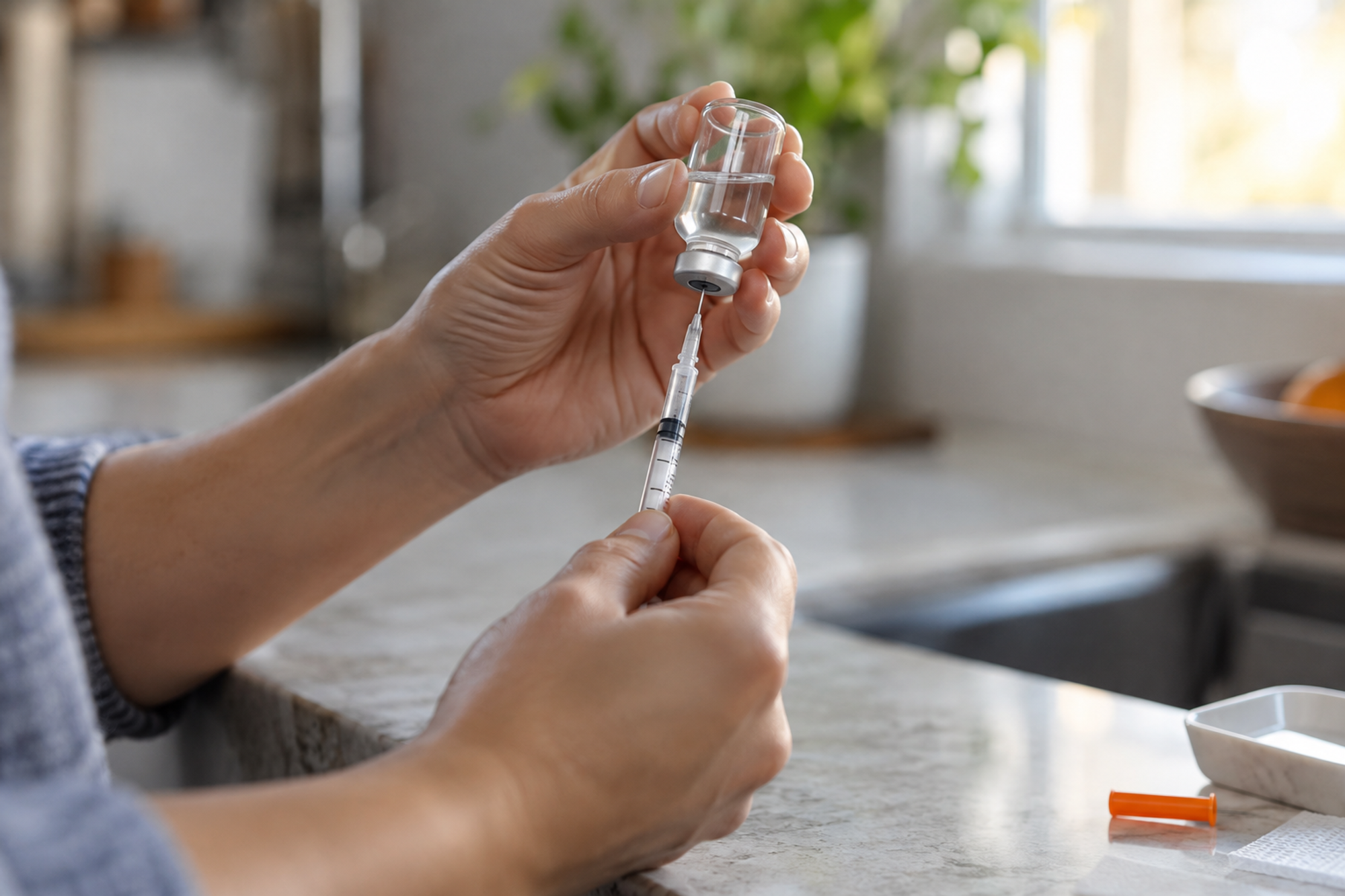
On dosing, the clearest evidence comes from compounded semaglutide. In July 2024 the FDA warned of adverse events, some requiring hospitalisation, linked to dosing errors with multiple-dose vials. [5] Patients unfamiliar with drawing medication into a syringe had often taken far more than prescribed — in some instances five to twenty times the intended dose — and some prescribers had miscalculated when converting milligrams to syringe units or millilitres. Reported harms included severe vomiting, dehydration, pancreatitis and gallstones.
That finding generalises well beyond semaglutide. A prefilled pen delivers a fixed dose. A vial and syringe require the patient to know the concentration, read the syringe's markings correctly and do arithmetic, which are skills most people have never needed. A genuine molecule becomes dangerous through a misread syringe.
5. "What should I watch for?"
This is the question most worth answering in writing, because the patient will need the answer when you are not there.
Any of the following warrants stopping and making contact the same day:
- Fever, chills or shaking within hours of an injection, which can indicate endotoxin or contamination.
- Redness, heat, spreading swelling or discharge at an injection site, which suggests infection.
- Severe or persistent abdominal pain, particularly if it radiates to the back, which raises concern for pancreatitis or gallbladder disease.
- Vomiting that prevents keeping fluids down, given the risk of dehydration and kidney injury.
- New swelling of the hands or feet, joint pain, or numbness and tingling in the fingers, which can indicate growth hormone axis overstimulation.
- Sweating, shakiness or confusion in anyone also taking diabetes medication, which suggests hypoglycaemia.
Hives, swelling of the lips or face, or difficulty breathing are an emergency, not a phone call.
There are also two things patients rarely think to ask about. The first is interactions. GLP-1 receptor agonists slow gastric emptying, which alters the absorption of oral medications; tirzepatide's labelling specifically advises switching to non-oral contraception, or adding a barrier method, for four weeks after starting and after each dose increase. The same delayed emptying creates aspiration risk under anaesthesia, so any surgical or endoscopy team needs to know.
The second is stopping. Effects that depend on continued exposure reverse when exposure ends. In the extension of the STEP 1 trial, participants who stopped semaglutide regained around two-thirds of their lost weight within a year. [6] That is not a safety event, but a patient who does not expect it may conclude the drug failed, or restart it from an unsafe source.
What the five questions have in common
Each is a request for certainty, and for most peptides the evidence cannot supply it. The clinical skill is not avoiding "we don't know." It is saying it specifically: what is known, what is not, what would change the answer, and what to watch for in the meantime.
Patients generally tolerate an honest "we don't know" better than being dismissed, and the disclosure literature suggests that expecting disapproval is one of the main reasons they stop telling clinicians what they take. An answer that is candid about its limits keeps them talking to you, which is the only position from which you can catch a problem early.
For how to run the wider conversation, see The peptide conversation: what your patients are already Googling. For where individual compounds sit on the evidence ladder, see Dr. Hassan Bennani's Evidence-based longevity medicine. For one of the most asked-about compounds, see BPC-157 in clinical practice.
- [1]Lincoff AM, et al. Semaglutide and cardiovascular outcomes in obesity without diabetes. New England Journal of Medicine. 2023;389:2221–2232.
- [2]Lee E, Burgess A. Safety of intravenous infusion of BPC-157 in humans: a pilot study. 2025.Two participants; verify journal and full citation.
- [3]Prescribing information for semaglutide (Ozempic, Wegovy) and tirzepatide (Mounjaro, Zepbound): boxed warning for thyroid C-cell tumours; tirzepatide guidance on oral hormonal contraceptives.Verify current label wording before publishing.
- [4]Evaluation of research-grade peptides marketed directly to consumers reveals extensive variability in purity and measured abundance. Preprint, 2026.Not peer reviewed at time of writing — verify publication status.
- [5]US Food and Drug Administration. FDA alerts health care providers, compounders and patients of dosing errors associated with compounded injectable semaglutide products. July 2024.
- [6]Wilding JPH, et al. Weight regain and cardiometabolic effects after withdrawal of semaglutide: the STEP 1 trial extension. Diabetes, Obesity and Metabolism. 2022;24(8):1553–1564.
The content on this site is provided for general information and education. It is not medical advice, and it is not a substitute for consultation with a qualified healthcare professional who knows your individual circumstances.
Many of the interventions discussed here are investigational. Some are available only within clinical trials; others are marketed directly to consumers without having been shown to be safe or effective for the purposes claimed. Nothing on this site should be read as a recommendation to start, stop or alter any treatment.
If you are considering a therapy you have read about here, discuss it with your own physician first.